How Much Roof Replacement Cost in Texas: 2026 Price Guide
A full roof replacement in Texas typically costs between $8,000 and $25,000, with most single-family homeowners paying somewhere around $12,000 to $18,000 for a standard asphalt shingle roof on a 2,000-square-foot home. Your actual price depends on the roofing material you choose, the size and pitch of your roof, where you live in the state, and how much tear-off is involved.
If you have already started getting quotes and something feels off, you are not alone. Texas is one of the most expensive states for roofing in the country because of its size, the volume of hail claims, and a construction labor market that stays tight in metro areas like Dallas–Fort Worth, Houston, Austin, and San Antonio.
This guide breaks down real price ranges by material and roof size, explains what drives the final number up or down, and shows you how to compare quotes without getting taken for a ride by a storm-chasing contractor.
Average Roof Replacement Cost in Texas
The single most useful number to anchor on is the cost per square — industry shorthand for 100 square feet of roof area. In Texas, the average roof replacement runs about $5.50 to $9.00 per square foot all-in, or roughly $550 to $900 per square. That includes old-roof tear-off, disposal, underlayment, flashing, and new material.
Where your home falls in that range depends mostly on material choice:
- Asphalt shingles: $5.50 to $7.50 per square foot
- Metal roofing: $9.00 to $16.00 per square foot
- Concrete or clay tile: $10.00 to $20.00 per square foot
- Slate: $15.00 to $30.00 per square foot
A common mistake is comparing two quotes that look at the same house but describe the work differently. One contractor may quote tear-off of a single layer while another prices a double-layer tear-off, or leave out drip edge, gutter replacement, or the permit fee. A lower number is not always the better deal — you are renting the roof’s first ten years either way.
Roof Replacement Cost by Square Footage in Texas
Roof size tracks home size, but not one-for-one. A 2,000-square-foot house generally has a roof deck between 2,300 and 2,800 square feet once you account for pitch, overhangs, and a two-car garage. That is why quoting by “home square footage” alone gets people into trouble.
Here is how a standard asphalt shingle replacement prices out across common Texas home sizes, assuming a single-layer tear-off and architectural shingles:
| Roof Size | Asphalt Shingles | Metal (Standing Seam) |
|---|---|---|
| 1,500 sq ft | $8,500 – $11,500 | $15,000 – $24,000 |
| 2,000 sq ft | $11,000 – $15,000 | $18,000 – $30,000 |
| 2,500 sq ft | $14,000 – $19,000 | $23,000 – $38,000 |
| 3,000+ sq ft | $17,000 – $24,000 | $28,000 – $45,000 |
For a deeper look at the per-unit math, see our guide on how much roof replacement cost per square foot.
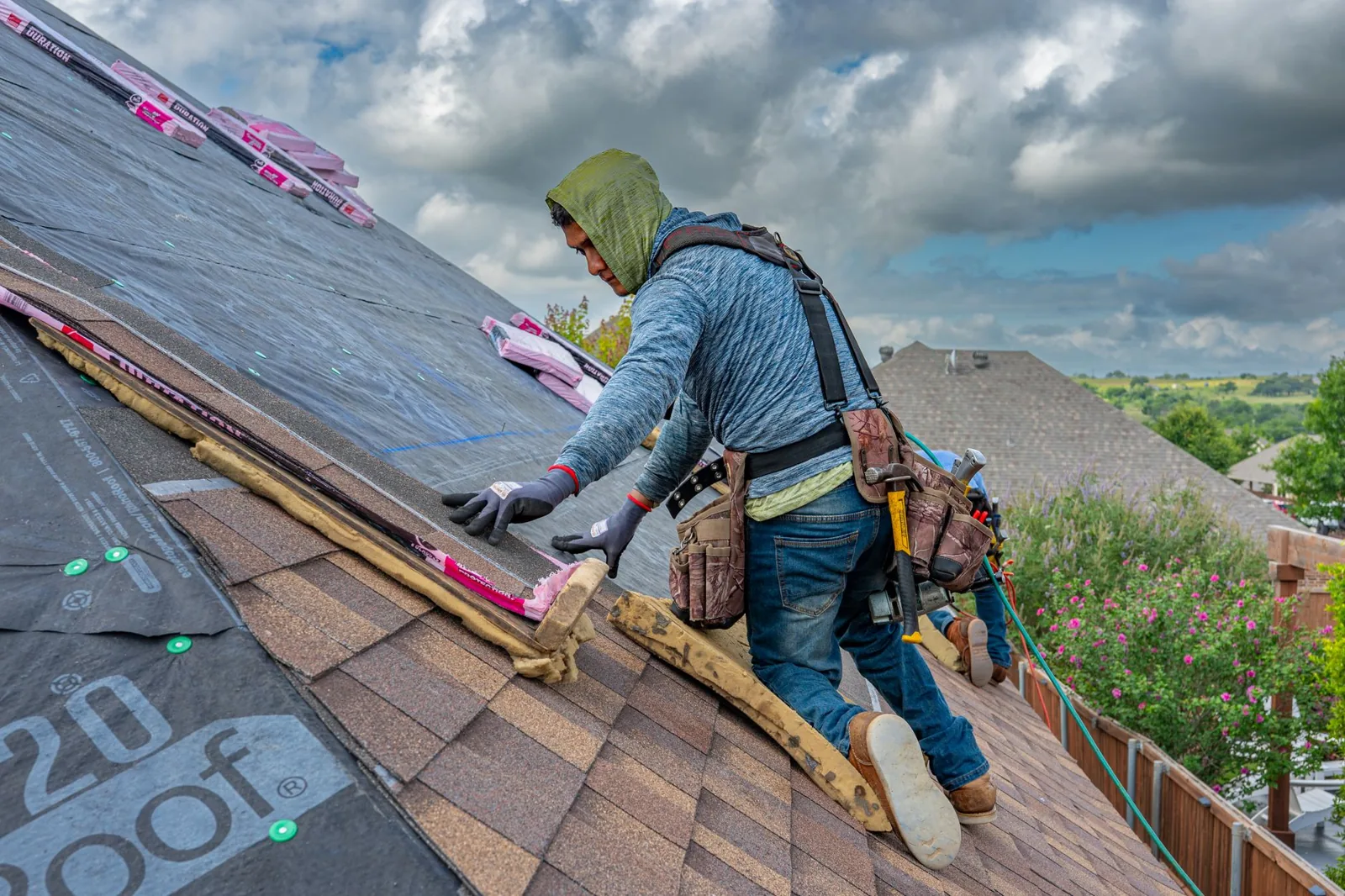
Roof Replacement Cost by Material in Texas
Material is the biggest single lever you control. Texas heat, hail, and wind all punish cheap materials, so the cheapest option is not always the cheapest to own over 20 years.
Asphalt Shingles
Architectural shingles dominate the Texas market for good reason. They handle heat reasonably well, are cheap to install, and have a straightforward insurance-claims path after a storm. Expect $5,500 to $9,000 per 1,000 square feet of roof area. Three-tab shingles run slightly less but are being phased out in many counties that now require impact-rated or heavier products under updated wind codes.
Metal Roofing
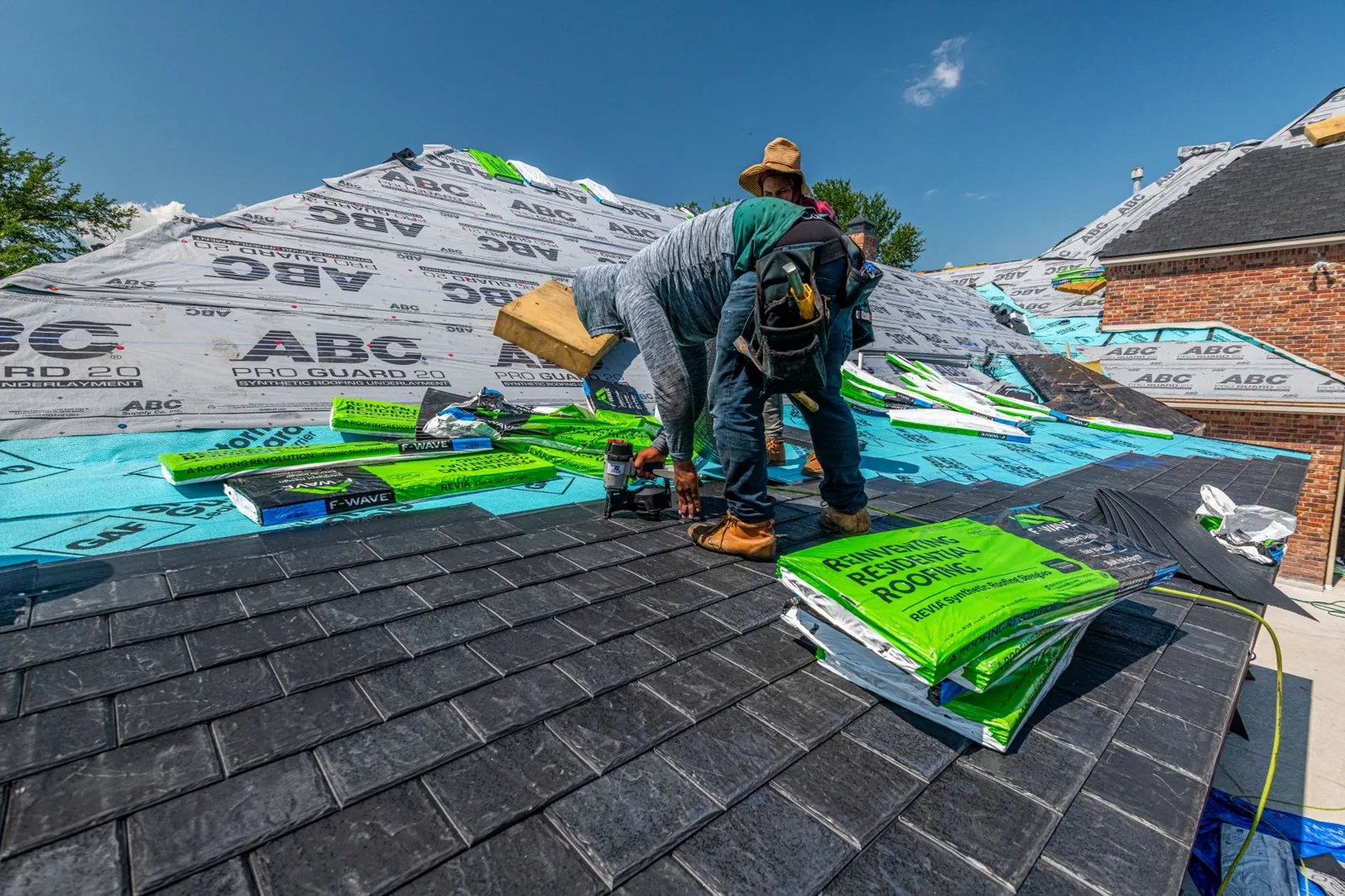
Standing-seam metal is surging in Texas because it shrugs off hail better than shingles and reflects a meaningful portion of the sun’s heat, which cuts cooling costs. Budget $9,000 to $16,000 per 1,000 square feet installed. Stone-coated steel, popular in Hill Country homes, lands toward the top of that range but carries a much longer lifespan.
Concrete and Clay Tile
Tile is the signature look of Spanish and Mediterranean homes across San Antonio, El Paso, and South Texas. It is heavy, which means the underlying deck sometimes needs reinforcement — an extra cost many first-time tile buyers do not expect. Plan for $10,000 to $20,000 per 1,000 square feet, and confirm your structure can carry the load before you sign.
Factors That Change Your Texas Roof Price
Two identical-looking homes in the same ZIP code can produce quotes thousands of dollars apart. Here is what actually moves the number.
Roof Pitch and Complexity
A walkable 4/12 roof is fast and cheap to install. A 10/12 roof on a two-story home with dormers, valleys, and multiple vent penetrations takes longer and costs more in safety equipment and labor. Steep or complicated roofs can add 15 to 30 percent.
Tear-Off and Layers
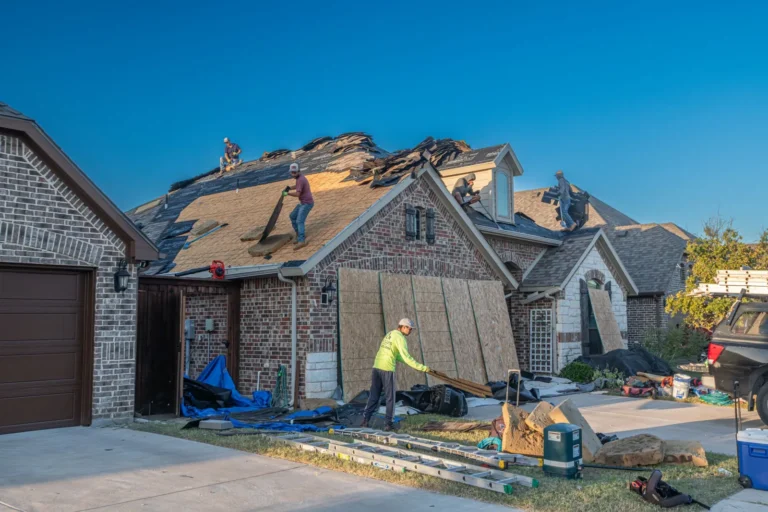
If your home already has two layers of shingles, code in most Texas municipalities requires a full tear-off before the new roof goes on. That adds $1 to $2 per square foot for labor and dump fees. Get the layer count in writing on every quote.
Hail, Wind, and Local Codes
Texas leads the nation in hail claims, and that has pushed coastal and Hill Country counties toward stronger wind and impact ratings. An impact-rated “Class 4” shingle can cut your premiums, but it costs slightly more upfront. Building codes also now frequently require ice-and-water shield in valleys and synthetic underlayment instead of felt — small line items that add up.
Labor Availability in Your Metro
Roofing labor in Dallas–Fort Worth and Houston is plentiful but busy, which keeps prices from dropping. Smaller markets may have fewer crews, so you trade a lower rate for a longer wait or a traveling crew with lighter local accountability. Always verify the contractor’s Texas registration and insurance before hiring.
Asphalt vs. Metal: Which Roof Fits a Texas Home?
The most common second question after “how much does it cost” is whether the premium for metal is worth it. The honest answer depends on how long you plan to stay and how much you value insurance use.
| Factor | Asphalt Shingles | Metal Roofing |
|---|---|---|
| Upfront cost | Lower | 1.5–2x higher |
| Typical lifespan | 20–30 years | 40–70 years |
| Hail resistance | Good (Class 4 options) | Excellent |
| Energy efficiency | Moderate | High (reflective) |
| Insurance discounts | Depends on rating | Often better |
If you plan to be in the home for a decade or more and are in a hail-prone county north of I-10, metal often comes out ahead over its lifespan. If you are prepping a home to sell or managing a tight repair budget after a storm, architectural asphalt shingles deliver the most value per dollar.
For a comparison of pricing between the two most common options, our guide on how much a roof replacement cost can help.
How to Compare Roof Replacement Quotes in Texas
Cheap is easy to find in Texas; good and honest is the part that takes work. When you sit down with three or four bids, line them up on the same page before you compare dollar signs.
- Get the scope in writing. Same material, same layer count, same underlayment, same flashing, same permit responsibility.
- Confirm Texas registration. Roofers are not required to carry a state roofer’s license in all Texas jurisdictions, but they must register with the state and follow local rules. Ask for proof of registration and general liability insurance.
- Match warranties. A 30-year shingle means nothing if the workmanship warranty is only 2 years. Look for a contractor who backs labor for at least 5 years.
- Check the storm-chaser red flags. Big deposits up front, door-to-door pressure after a storm, and offers to “waive” your deductible are all warning signs — and deductibles engineered away are insurance fraud under Texas law.
How to Pay for a Texas Roof Replacement
Most Texas homeowners use one of three routes: insurance, financing, or cash.
Homeowners Insurance
If a named storm or hail event damaged your roof, an insurance claim can cover most of the cost minus your deductible — commonly 1 to 2 percent of your dwelling coverage. File promptly, document the damage with photos, and get an independent inspection before the adjuster’s visit so you have your own evidence.
Financing
Many established Texas roofing companies offer financing through third-party providers, with terms from 12 months to 10-plus years. Interest rates vary widely, so compare a roof loan against a home equity line of credit before committing. A 12-month same-as-cash plan is only a good deal if you actually pay it off in 12 months.
Cash and Off-Season Timing
Cash is still the cheapest financing there is, and timing helps. Roofers are busiest after hailstorms and in the spring. Scheduling a replacement in late fall or winter can sometimes save 5 to 10 percent, provided the crew can work around cooler, wetter weather. Curious how Texas stacks up against the rest of the country? Read our breakdown of how much roof replacement cost in California.
For current benchmarks and deeper how-to detail, the team at This Old House keeps regularly updated reference guides worth bookmarking.
Frequently Asked Questions
How much does a new roof cost in Texas in 2026?
Most Texas homeowners pay between $8,000 and $25,000 for a full replacement, with the common range falling around $12,000 to $18,000 for a standard asphalt shingle roof on a 2,000-square-foot home. Material choice and roof complexity swing the number the most.
Is it cheaper to replace a roof in Texas than other states?
Not especially. Texas sits on the higher end of the national average because of its size, frequent hail damage, and strong demand in fast-growing metros. Prices are comparable to or slightly above the national median, and higher in peak storm seasons. See how much roof replacement cost for a broader view.
How long does a roof replacement take in Texas?
A standard tear-off and re-roof on a single-family home takes 1 to 3 days for an experienced crew, plus time for permits and inspections in some cities. Metal and tile roofs run longer — often 3 to 5 days — and complex or steep roofs add time.
What is the cheapest roof to put on a Texas house?
Three-tab asphalt shingles are the cheapest upfront, but architectural shingles offer far better durability and wind performance for only a modest premium. Given Texas hail and wind, impact-rated architectural shingles are usually the best cheap-to-own choice.
Do I need a permit to replace my roof in Texas?
Most Texas cities require a permit and an inspection for a full roof replacement, though rules vary by municipality. Your contractor should handle this, but verify it is included in the written scope rather than assumed.
The Bottom Line
The straight answer to how much roof replacement cost in Texas is that most homeowners spend between $8,000 and $25,000, with the typical asphalt shingle job landing around $12,000 to $18,000. The variables — material, roof size, pitch, layer count, and your local code and labor market — can push that number by 30 percent or more in either direction.
The best way to protect yourself is to get at least three written quotes that describe the exact same scope of work, verify registration and insurance, and compare warranties rather than just the bottom-line number. Whether you choose architectural shingles or standing-seam metal, a roof installed correctly in Texas is a roof you will not think about again for 20 years — and in a state that gets every kind of weather, that peace of mind is exactly what you are paying for.