Solar Panel Cost and Installation Cost: What Homeowners Actually Pay
Most homeowners think of solar as a single price tag. It isn’t. The total you’ll write a check for comes from two different buckets: the solar panel cost and installation cost for the hardware itself, plus the labor, permits, and electrical work that turn a stack of panels into a working power plant on your roof. Confusing the two is the most common way people overshoot their budget.
Here’s the number most people actually care about up front: a typical residential system in the United States runs between $15,000 and $30,000 before incentives for a 6 to 10 kilowatt (kW) array. The federal solar tax credit knocks 30% off that, taking most out-of-pocket costs into the $10,500 to $21,000 range. Everything below digs into where that money goes and how to keep it from ballooning.
Breaking Down the Solar Panel Cost and Installation Cost
Solar quotes bundle several line items. Understanding each one makes you a harder customer to overcharge and a faster one to sign with confidence.
1. Panel hardware (roughly 25–30% of the quote)
The panels themselves are usually the most predictable line item. Current pricing runs about $0.70 to $1.50 per watt for the panel alone, with mainstream tier-1 brands such as Qcells, REC, Canadian Solar, and Silfab landing toward the middle of that band.
- Budget panels (many polycrystalline or older designs): $0.70–$0.90/watt
- Mainstream monocrystalline (Qcells, Canadian Solar): $0.90–$1.20/watt
- Premium, high-efficiency (REC Alpha, SunPower/Maxeon, Silfab Elite): $1.20–$1.50/watt
The efficiency gap is real but smaller than salespeople imply. A premium 22% panel may fit the same output into slightly less roof space than a 19% panel, but if your roof has room, you can often save several thousand dollars by choosing a mid-tier panel and adding an extra one.
2. Inverter and electrical balance-of-system (10–15%)
Panels produce direct current (DC); your home runs on alternating current (AC). Converting between them takes an inverter, and this is where a meaningful amount of your money goes.
- String inverters (one central unit, often SolarEdge or Fronius): $1,500–$3,000
- Microinverters (one small inverter per panel, often Enphase): $150–$250 per panel, so $3,000–$5,000 for a 20-panel array
- Power optimizers (SolarEdge, paired with a string inverter): about $60–$90 per panel
Microinverters and optimizers add cost but pay off when your roof has partial shade or multiple angles, because one underperforming panel doesn’t drag down the whole string.
3. Labor, permitting, and installation (50–55%, the real driver)
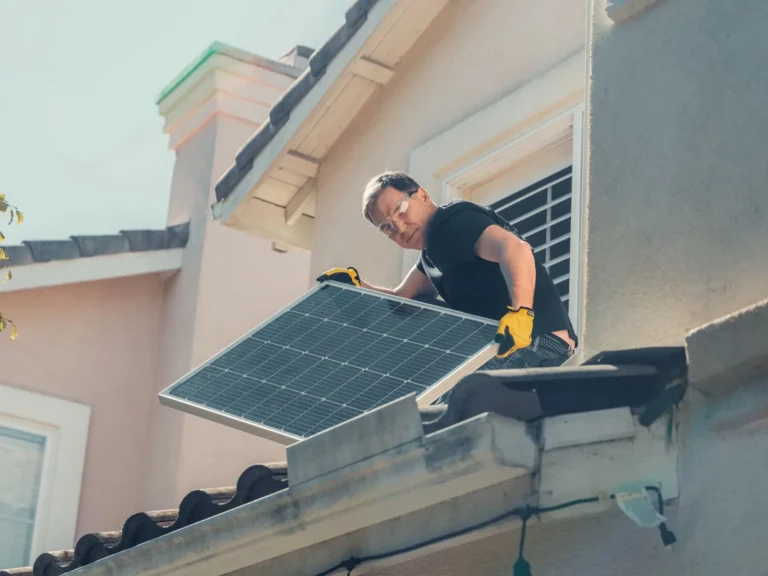
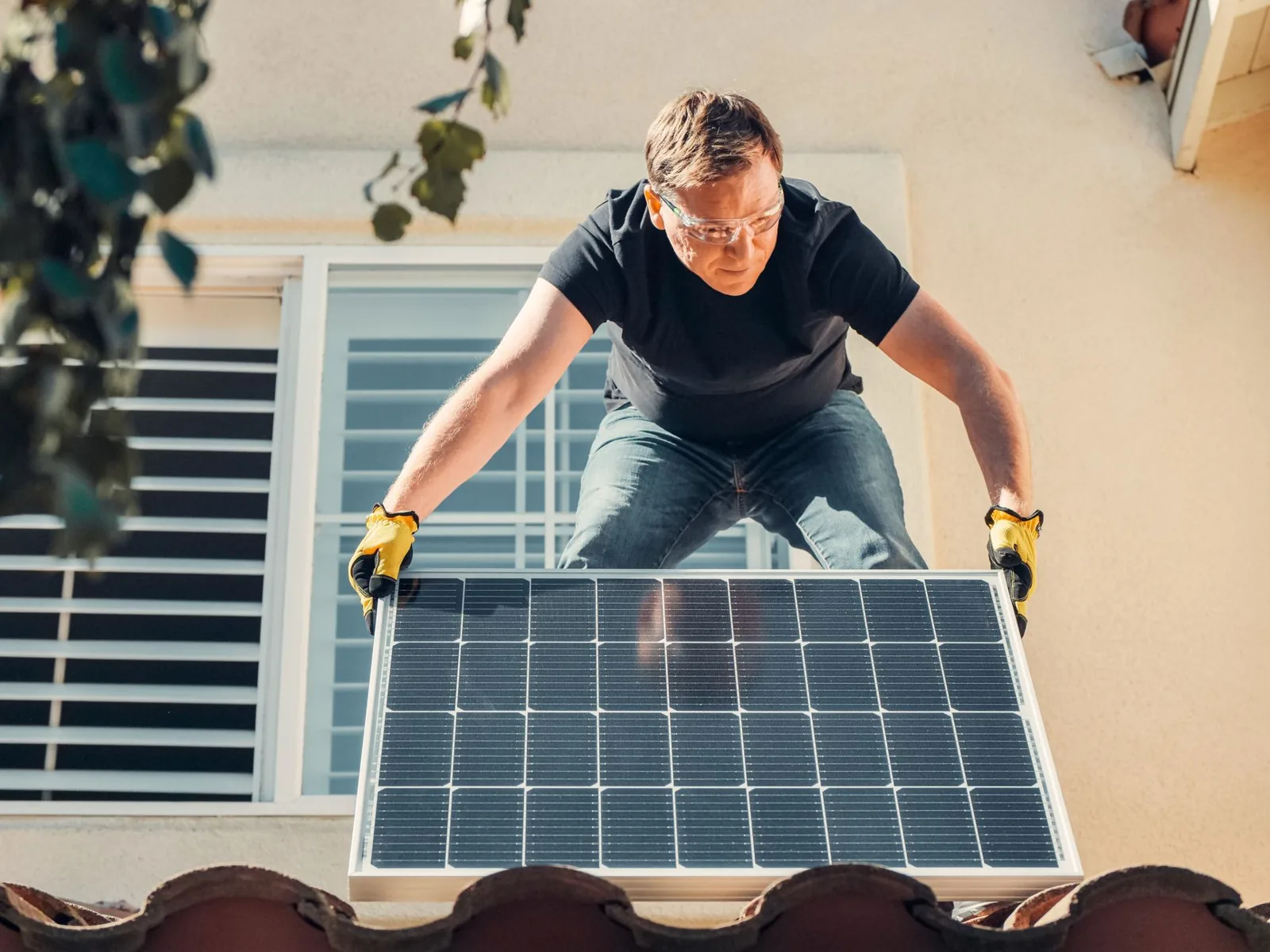
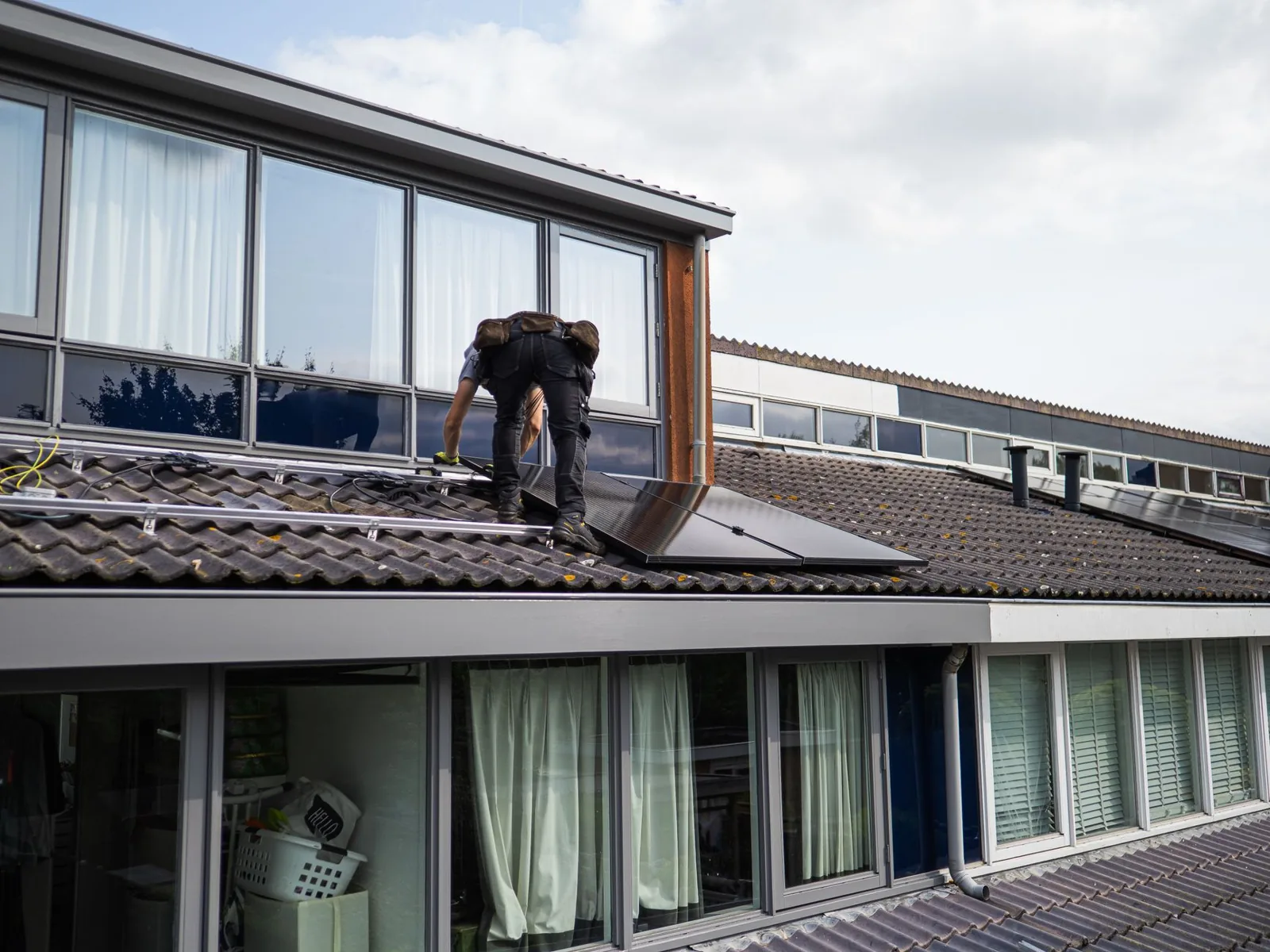
Here’s the part most shoppers miss. The single biggest variable in solar panel cost and installation cost is the crew doing the work — not the equipment on the truck. Installers commonly charge $0.75 to $1.50 per watt just for labor and installation, which on a 7 kW system means roughly $5,000 to $10,000 before a single panel is mounted.
| Factor | Lower-Cost Install | Higher-Cost Install |
|---|---|---|
| Roof pitch and material | Single-story, low-slope comp shingle | Steep, tile, metal, or slate roof |
| Electrical panel type | 200A panel with open breaker slots | 100A panel needing an upgrade to 200A |
| Array location | Ground mount, easy access | Second/third-story roof, tight access |
| Labor market | Plenty of regional installers | High-demand metro or remote area |
| Extras | Standalone system, no battery | Battery backup, EV charger, consumption monitoring |
Roof condition is the sleeper cost. If your shingles are within a few years of needing replacement, do it before or alongside the install — otherwise you’ll pay $2,000 to $6,000 later just to have the array removed and reinstalled.
What a Typical 6 kW System Costs in 2026
A 6 kW array — about 14 to 18 panels — covers the bill for most average-size homes. This is the number you’ll see quoted most often, so it’s worth pinning down.
- National average, all-in before incentives: $17,000 to $21,000
- Per-watt cost for the full install: $2.75 to $3.50
- After the 30% federal tax credit: roughly $12,000 to $14,700
That per-watt figure is the most useful comparison tool you have. When a quote comes in, divide the total price by the system’s wattage. Anything under about $2.60/watt is aggressive; anything over about $3.80/watt deserves a second and third quote. For more on what panels themselves average, see our breakdown of how much is an average solar panel cost.
Financing Changes the Real Price of Solar
The sticker price and the price you actually pay over time are different numbers. How you fund the system moves the final cost by thousands.
Cash purchase
Cheapest over the long run, no interest, but the full amount leaves your account up front — and you still claim the entire 30% tax credit yourself.
Solar loan
Installer-partnered lenders are convenient but often bury dealer fees of 20–30% into the quoted loan amount. A “$20,000 system” can quietly become a $26,000 loan balance before interest, all to buy down the rate to a flashy 3.99%. Bank or credit-union home-equity options usually beat these. If you’re weighing a loan, read our guide to how much does it cost to finance solar panels.
Lease or power purchase agreement (PPA)
No money down and no federal tax credit — the leasing company keeps it. Your monthly payment is lower than your old electric bill, but you’ll save far less over 25 years and a lease can complicate selling the home. Treat these as a last resort, not a shortcut.
The bottom line: cash is cheapest, an honest low-fee loan is workable, and a lease usually transfers most of the value to the finance company instead of you.
Incentives That Shrink Your Out-of-Pocket Cost
The headline incentive is the federal Investment Tax Credit (ITC), which covers 30% of the total installed cost — panels, labor, permits, and even a battery if it’s charged by your array. It’s a dollar-for-dollar credit against your federal income tax, not a deduction, and there’s no cap on residential systems through 2032.
- Federal ITC: 30% through 2032, stepping to 26% in 2033 and 22% in 2034
- State rebates: vary widely; New York, Massachusetts, and Illinois have some of the strongest
- Solar renewable energy certificates (SRECs): sellable credits in certain states and DC
- Net metering: credits you for excess power pushed back to the grid, effectively raising your savings
- Property tax exemptions: many states exempt the added home value from reassessment
Stacking these is how a $20,000 system routinely becomes a $13,000 out-of-pocket project. Check what your state actually offers before you budget around a national figure — the rebate amounts vary a lot.
How to Keep Your Quote Honest
Three quotes are the minimum; five is better. Solar pricing is one of the most quote-dependent purchases in the home, and the same equipment can arrive with a $6,000 spread across installers.
- Compare per-watt, not total. Ask every installer for the per-watt price of the full system, batteries excluded.
- Get the panel and inverter brands in writing. “Tier-1” is marketing; “Qcells Q.TRON 425W with Enphase IQ8+” is a spec you can check.
- Ask about the electrical panel up front. If you have a 100A panel, make the installer confirm in writing whether a 200A upgrade is included.
- Verify the warranty terms. Look for a 25-year product and performance warranty on panels, and 25 years on microinverters.
- Watch the rebate math. A dishonest quote will show “your price” already net of an incentive you may not actually qualify for.
A reputable installer will happily show their math line by line. One that resists is pricing you on emotion, not equipment.
For current benchmarks and deeper how-to detail, the team at Energy.gov keeps regularly updated reference guides worth bookmarking.
Frequently Asked Questions
How much does it cost to install solar panels on a 2,000-square-foot home?
Plan on roughly $17,000 to $25,000 before incentives for a system sized to offset the average 2,000-square-foot home’s usage, which typically needs 6 to 9 kW. After the 30% credit, that’s about $12,000 to $17,500 out of pocket.
What is the average solar panel cost and installation cost per watt?
Across the U.S., the full installed cost runs about $2.75 to $3.50 per watt before incentives. That includes panels, inverter, labor, permits, and wiring — not just the hardware.
How long does a solar panel installation take?
Most residential installs take one to three days of on-site work. The full timeline from signed contract to permission-to-operate — permitting, interconnection approval, and inspection — more often runs one to three months.
Is solar worth it if I plan to move soon?
If you’ll sell within three to five years, solar is a long-term asset you may not fully recoup. A paid-off system generally adds resale value and sells homes faster in most markets, but a lingering lease or loan balance can slow a sale, so cash or an assumable loan is the safer play.
Do solar panels really reduce the electric bill to zero?
Rarely. A correctly sized array offsets most of your usage, but you’ll still pay grid connection fees, and net-metering credits rarely wipe the bill completely. Most well-sized systems cut the annual bill by 80–100% of the energy portion.
The Bottom Line
Solar panel cost and installation cost will land most homeowners between $15,000 and $30,000 before incentives, with roughly half that going to labor and installation rather than the panels you can see from the street. Get three to five quotes, compare them on a per-watt basis, verify the equipment by exact brand and model, and run your own numbers on financing before you sign.
Done right, a paid-off system returns its cost in energy savings within 8 to 12 years and keeps producing for 25. Done on a hurried lease, it mostly produces profit for someone else. Take your time, stack the federal credit with any state rebates, and the math almost always lands in your favor.