How Much New Roof Cost Per Square Foot? Complete 2025 Pricing Guide
How much new roof cost per square foot is one of the first questions any homeowner asks before replacing or installing a roof. In 2025, you’ll typically pay between $4.50 and $15 per square foot for a new roof, with most asphalt shingle roofs landing in the $4.50 to $8.50 range and premium options like standing-seam metal or slate climbing well past $20 in some markets. The final number swings on three things: the material you choose, your roof’s pitch and complexity, and local labor rates.
A “square” in roofing equals 100 square feet, which means the raw material cost gets multiplied across your entire roof plane. That’s why knowing the per-square-foot price is useful, but knowing the per-square price is what contractors actually quote. In this guide, we break down real numbers — per square foot and per square — so you can budget a roof replacement without getting caught off guard by line items you never saw coming.
The range is wide for a reason. A simple, low-pitch ranch house in a low-cost market can reroof for under $6,000, while a steep, cut-up Victorian in a coastal city can easily clear $40,000 for the same square footage in slate or copper. Understanding what moves the price is the difference between a fair quote and an expensive lesson.
What Impacts the Cost Per Square Foot
Material Choice
Material is the single biggest lever on price. Asphalt shingles remain the cheapest and most common, while metal, tile, and slate push costs up sharply. Here’s how common materials stack up on a per-square-foot basis:
| Material | Cost Per Sq Ft (Installed) | Cost Per Square (100 sq ft) | Lifespan |
|---|---|---|---|
| 3-Tab Asphalt Shingle | $4.50 – $5.50 | $450 – $550 | 15–20 years |
| Architectural Asphalt Shingle | $5.50 – $8.50 | $550 – $850 | 25–30 years |
| Standing-Seam Metal | $9.00 – $15.00 | $900 – $1,500 | 40–70 years |
| Clay or Concrete Tile | $10.00 – $20.00 | $1,000 – $2,000 | 50–100 years |
| Slate | $15.00 – $30.00+ | $1,500 – $3,000+ | 75–150 years |
Architectural shingles now dominate the asphalt category — they cost only a bit more than 3-tab but look better and last a decade longer, which is why they’re the default recommendation for most homes.
Roof Pitch and Complexity
A roof’s steepness drives labor cost, sometimes more than material does. Anything over a 6/12 pitch is considered steep and gets a multiplier, because crews move slower, spend more time on safety, and can’t stage materials as efficiently. The same 2,000-square-foot roof that costs $12,000 at a gentle 3/12 pitch can run $16,000 or more at a 10/12 pitch, even with identical shingles.
Cut-up rooflines — valleys, dormers, chimneys, skylights — add the same kind of premium. Every penetration and transition requires hand-flashing and detail work, and detail work is where labor hours accumulate.
Tear-Off vs. Re-Roof
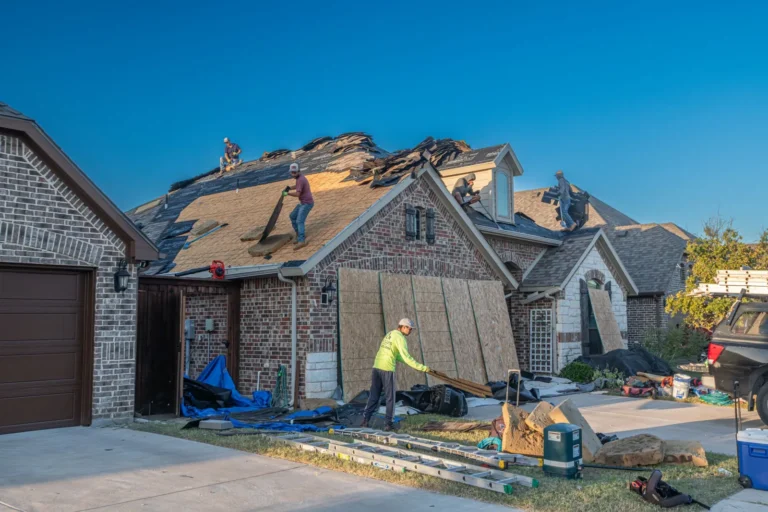
Whether the old roof comes off changes the math. An overlay — installing new shingles over one existing layer — saves the tear-off cost, often trimming $1.50 to $3 per square foot off the job. But overlays hide rot, add weight, and void the shingle manufacturer’s warranty in many cases. Most reputable contractors and building codes now require a full tear-off, which also lets them inspect and replace damaged decking.
Underlayment, Decking, and Extras
The number you see quoted rarely includes everything. Expect add-ons like:
- New underlayment (synthetic or felt) — $0.35 to $0.75 per square foot
- Decking replacement — $2 to $4 per square foot where OSB or plywood is rotted
- Ice and water shield — required in cold climates, $0.75 to $1.50 per square foot along eaves and valleys
- Fascia, soffit, and drip edge — often replaced at the same time, $3 to $10 per linear foot
- Skylight or vent work — anywhere from $200 to $2,000 each depending on what’s found
How Labor and Location Shift the Number
Labor typically represents 50–60% of a roof replacement, which is why geography matters as much as material. A crew in the Southeast or Midwest might charge $50–$70 per hour, while the same skill set in the Northeast, Pacific Northwest, or major California metros bills $80–$120 per hour. That flows straight into your per-square-foot price.
Material cost is more stable nationwide, but labor isn’t. If a quote in Denver lands at $6.50 per square foot for architectural shingles while a similar roof in San Francisco runs $9, it’s usually labor and permitting — not shingles — driving the gap. When you’re comparing bids, ask each contractor to break out materials and labor separately so you can see exactly what you’re paying for.
Average Cost by Roof Size
To turn the per-square-foot number into a real budget, multiply by your actual roof area. Note that roof area is larger than your home’s floor area — a 2,000-square-foot house often has a 2,300 to 2,800 square foot roof once pitch and overhangs are counted.
| Home Size (Floor) | Est. Roof Area | Asphalt (Arch.) | Metal |
|---|---|---|---|
| 1,500 sq ft | 1,800 sq ft | $9,900 – $15,300 | $16,200 – $27,000 |
| 2,000 sq ft | 2,400 sq ft | $13,200 – $20,400 | $21,600 – $36,000 |
| 2,500 sq ft | 3,000 sq ft | $16,500 – $25,500 | $27,000 – $45,000 |
| 3,000 sq ft | 3,600 sq ft | $19,800 – $30,600 | $32,400 – $54,000 |
These are installed prices at the mid-range of the architectural-shingle and standing-seam-metal brackets above. For a deeper look at the variables that tug these numbers up and down, how much roof replacement cost per square foot walks through the same math from the replacement angle.
Choosing the Right Material for Your Budget
The cheapest roof is rarely the best value. A 3-tab shingle roof might save you $2,000 up front, but it lasts nearly half as long as an architectural shingle and looks dated almost immediately. In most markets, architectural shingles deliver the best balance of cost, lifespan, and curb appeal.
If you plan to stay in the home for a decade or more, standing-seam metal starts to win on total cost of ownership. It’s two to three times the upfront cost of asphalt, but with a 40-to-70-year lifespan and lower maintenance, the per-year cost can come out even or better — especially in hail-prone or coastal areas. The catch is the higher out-of-pocket hit today, and the fact that metal requires a more specialized installer.
Materials like slate, tile, and copper are best treated as a premium decision rather than a budget one. They can transform the look of a home and last a century, but the structural weight often requires roof reinforcement, adding another layer of cost before installation even begins.
How to Get an Accurate Quote
The only way to turn these ranges into a real number for your house is to get multiple bids. Three is the minimum worth gathering; they’ll rarely be close, and the spread itself is instructive. A low bid often means an overlay, cheaper underlayment, or a crew that rushes flashing — the exact corners that cost you years of lifespan.
Ask every contractor the same set of questions:
- Does the price include a full tear-off of the old roof?
- What’s the underlayment and flashing spec?
- Is there a separate line item for decking repair, and at what per-sheet rate?
- What’s the payment schedule, and when is final payment due?
- Is the crew licensed, insured, and employed directly rather than subcontracted?
- What warranty covers the workmanship, and for how long?
Get all of that in writing. A qualified roofer will have no problem itemizing it; a vague estimate is a warning sign. Also confirm the quote includes permit fees and disposal of old material — dump fees for a tear-off can run $400 to $1,000 on their own.
If you’re uncertain what a fair full-project price looks like, how much should a roof replacement cost breaks down a realistic national range, and how much does a roof replacement cost covers the same ground by material type.
Frequently Asked Questions
How much does a new roof cost per square foot in 2025?
Most homeowners pay $4.50 to $8.50 per square foot for an architectural asphalt shingle roof installed, and $9 to $15 per square foot for standing-seam metal. High-end materials like slate or copper can exceed $30 per square foot.
Is roof cost measured in square feet or squares?
Both, but contractors quote in “squares,” where one square equals 100 square feet. When a roofer says the job is 24 squares, that’s a 2,400-square-foot roof. The per-square-foot figure is the same number divided by 100 for comparison.
Why does a steep roof cost more per square foot?
Steep and complex roofs cost more because of labor, not material. Crews work slower for safety, need more staging, and spend extra hours on valleys, hips, and penetrations. Pitch multipliers of 1.2x to 1.6x are common above 6/12.
Can I save money by roofing over the old shingles?
Sometimes, but it’s usually a false economy. An overlay skips tear-off and saves $1.50 to $3 per square foot, but it hides rot, adds weight, and frequently voids the shingle warranty. A full tear-off is the better long-term choice for most homes.
How much is a new roof for a 2,000-square-foot house?
For a 2,000-square-foot house with roughly 2,400 square feet of roof, expect $13,200 to $20,400 for architectural shingles and $21,600 to $36,000 for standing-seam metal. Location, pitch, and existing roof condition move these numbers substantially.
The Bottom Line
How much new roof cost per square foot is a question with a real answer — $4.50 to $15 for most homes — but the useful version of that answer is specific to your material, your pitch, and your market. Start with the material bracket you can afford, gather three itemized bids, and insist on a full tear-off with named underlayment and flashing specs.
A roof is one of the few home investments where a few thousand extra dollars spent correctly returns a decade or more of trouble-free service. Get the details in writing, compare labor and material lines side by side, and choose the quote that’s honest about the corners it isn’t cutting.
For a step-by-step look at the planning side of the project, start with how much roof replacement cost. If you want to see the material-by-material numbers in more depth, Angi’s roof cost guide and This Old House’s shingle cost breakdown are reliable reference points to check your quotes against.